Analysis of the Biogas Potential of Organic Waste from Keranggot Market and Household Waste in Cilegon City
Abstract
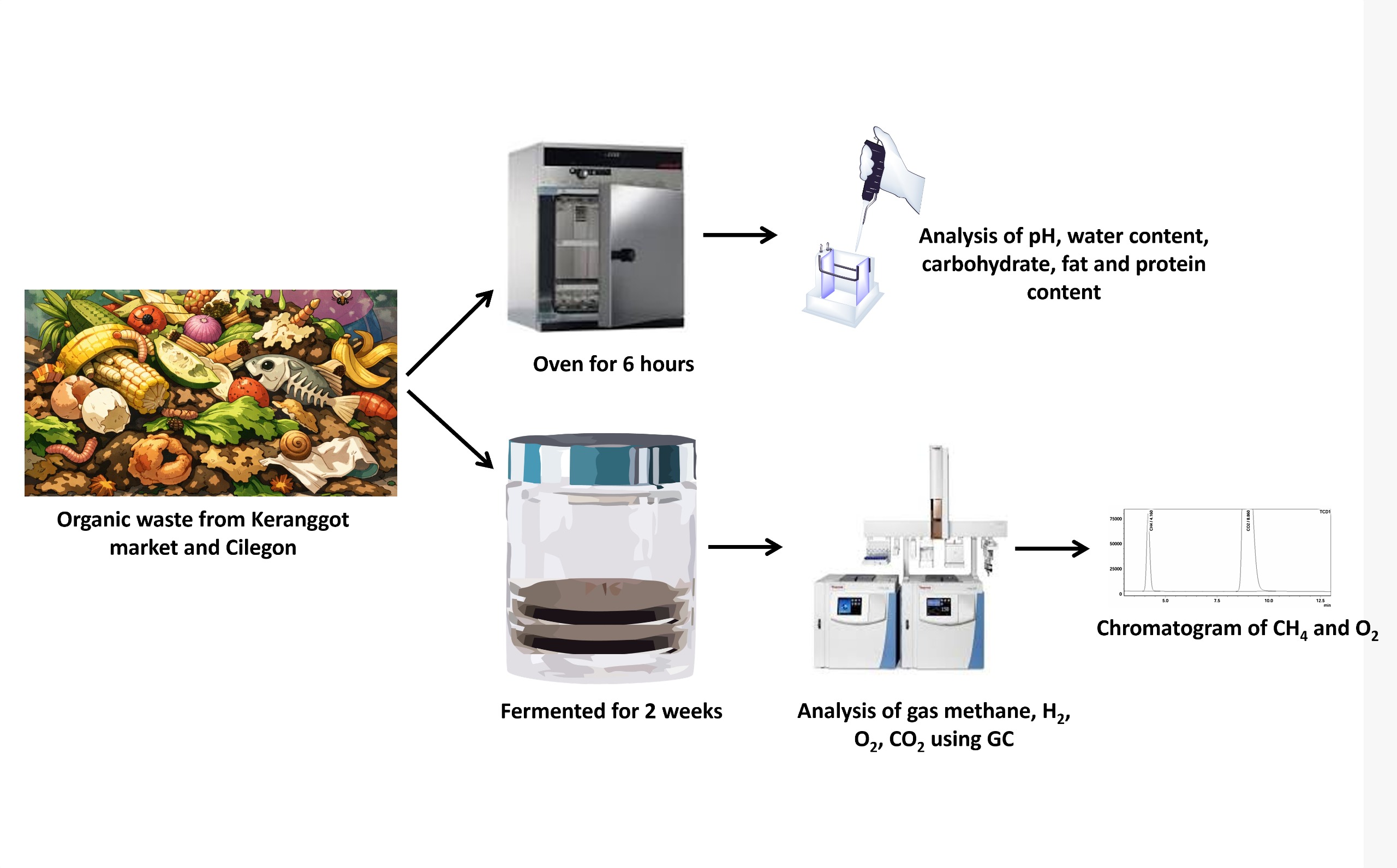
Organic waste from traditional markets and households represents a significant environmental challenge but also offers potential as a renewable energy source through biogas production. This study aimed to evaluate the chemical composition and gas production potential of organic waste collected from Keranggot Market and household sources in Cilegon City. Proximate analysis was conducted to determine pH, moisture content, crude fiber, fat, carbohydrate, and protein levels, while total organic carbon (TOC) was measured using the dry combustion method. Gas composition (N₂, O₂, H₂, CH₄, and CO₂) was analyzed by gas chromatography after storage in drum containers for one and two weeks. The results showed that the waste samples had an acidic pH (5.18), high moisture content (3.00%), high crude fiber content (55.01%), moderate fat (6.76%) and protein levels (5.56%), and a total organic carbon content of 19.11%. The calculated C/N ratio was approximately 21.5, which falls within the optimal range for anaerobic digestion. Gas analysis revealed the presence of methane (1.10%) and carbon dioxide (6.71%) after two weeks of storage, confirming the onset of anaerobic decomposition. These findings suggest that organic waste from Keranggot Market and household sources in Cilegon City has potential as a feedstock for biogas production, although pretreatment may be required to overcome the high lignocellulosic content.