Photoluminescent Carbon Dots for Intelligent Food Packaging: A Review on Sensing Mechanisms and Applications
Abstract
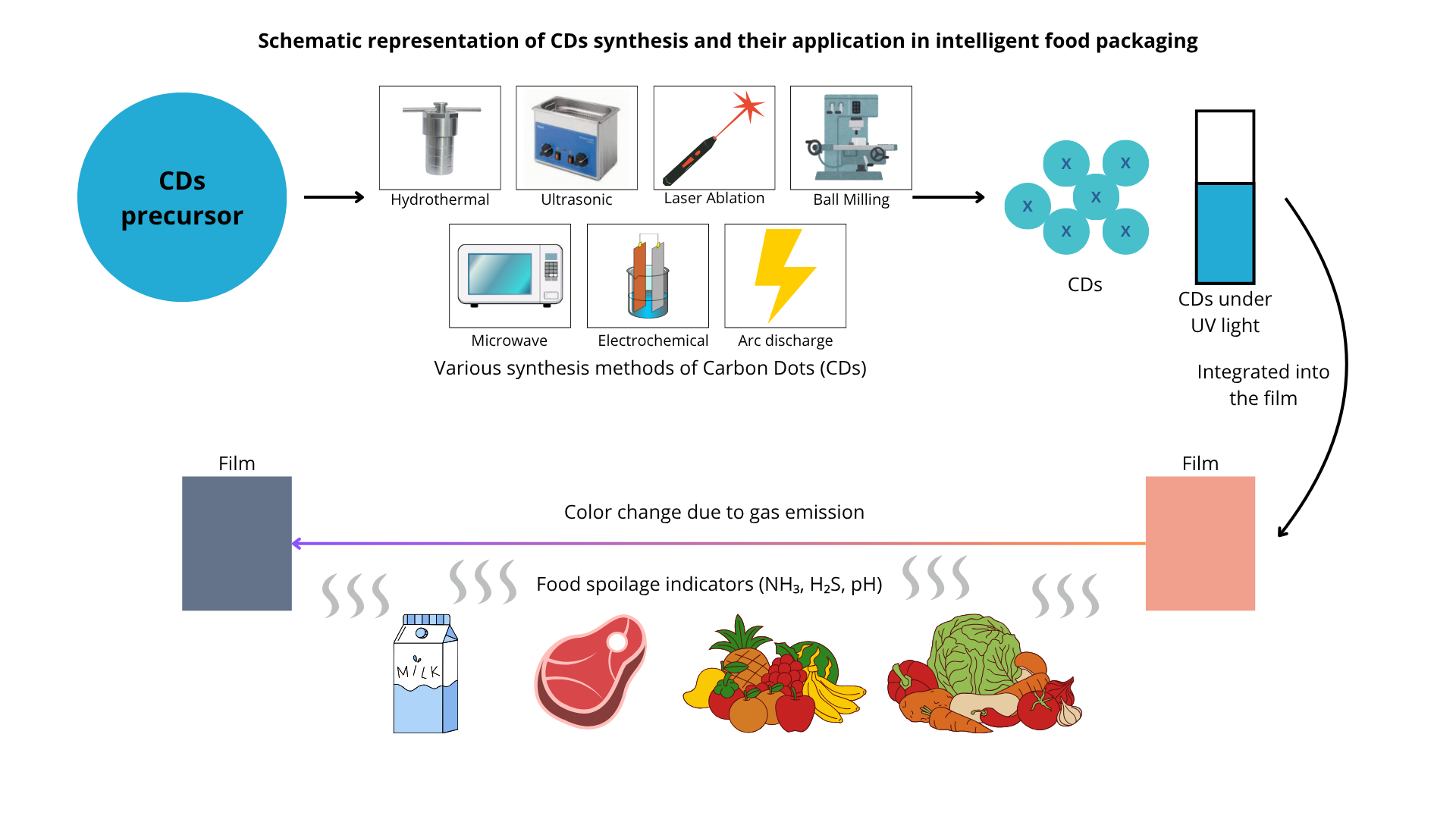
Ensuring food safety and quality has become a global priority, demanding innovative solutions to detect early signs of spoilage or contamination. Intelligent food packaging systems offer a promising approach through real-time monitoring of food quality. Among various sensing materials, carbon dots have emerged as a novel class of fluorescent nanomaterials with exceptional optical properties, high water solubility, low toxicity, and tunable photoluminescence. This review discusses the synthesis strategies of CDs particularly focusing on green synthesis using biomass waste and their photoluminescence mechanisms including quantum confinement, surface state, carbon core state, and molecular state emissions. The application of CDs in smart packaging is highlighted, especially in detecting spoilage indicators such as ammonia, hydrogen sulfide, Total Volatile Basic Nitrogen, and pH changes. Various studies demonstrate the ability of CDs embedded in biopolymer matrices to produce distinct color changes in response to food spoilage, making them effective visual sensors. These findings support the development of eco-friendly, sensitive, and low-cost nano sensors for next-generation intelligent packaging technologies.