Removal of Remazol Red Dye: The Influence of Acid Type, FeCl3 Coagulant, and Chia Seed (Salvia hispanica L.) Flocculant Dosages
Keywords:
Synthetic coagulants, Natural flocculants, Coagulation-flocculation, Azo dyes
Abstract
Waste from the batik industry has become increasingly abundant as the textile sector has grown. One significant pollutant in aquatic environments is the synthetic dye Remazol Red. This study investigates the removal of Remazol Red as a solution to mitigate environmental pollution. The method employed is coagulation-flocculation, using the synthetic coagulant FeCl3 modified with a natural flocculant, specifically chia seeds (Salvia hispanica L.). The research parameters included the type of acid (HCl, H2SO4, and HNO3), coagulant dosage, and flocculant dosage. The coagulation process was conducted at 700 rpm for 4 minutes, followed by flocculation at 50 rpm for 30 minutes. The results indicated that HCl yielded the highest removal percentage (98.98%). Furthermore, the optimum coagulant concentration resulted in 97.11% removal, while the optimum flocculant dose was 300 mg/L with a removal percentage of 98.57%. FTIR spectrophotometry characterization revealed that the sulfonate group (SO2) of Remazol Red and the Fe-Cl group in FeCl3 interacted with the carbonyl group (C=O) of the chia seeds.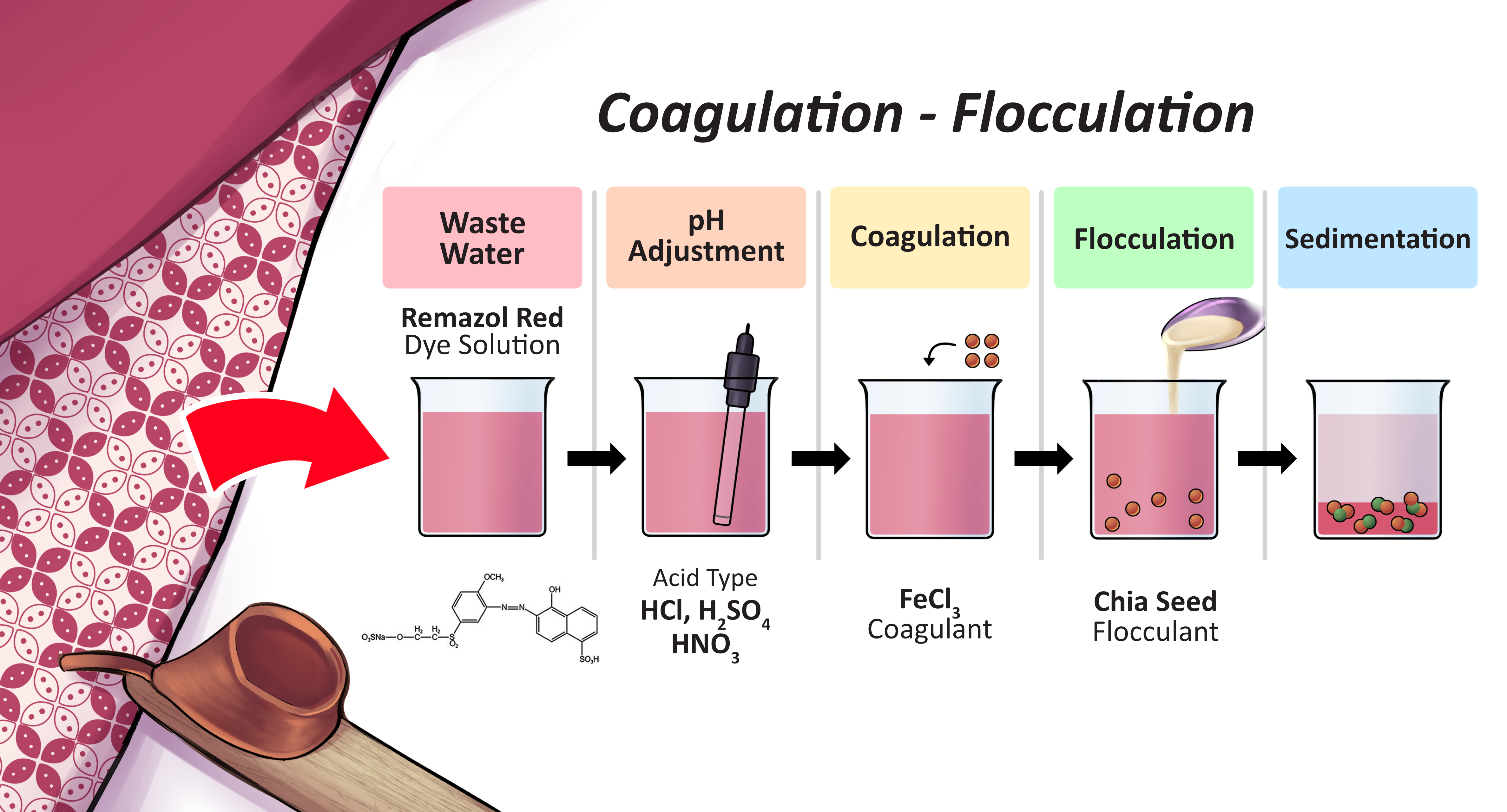
Published
2026-08-12
How to Cite
Anugraheni, F., Fardiyah, Q., & Rumhayati, B. (2026). Removal of Remazol Red Dye: The Influence of Acid Type, FeCl3 Coagulant, and Chia Seed (Salvia hispanica L.) Flocculant Dosages. Jurnal Kartika Kimia, 9(1), 187-195. https://doi.org/10.26874/jkk.v9i1.1119
Section
Articles